Case 04 · Ikatec
Design Ops
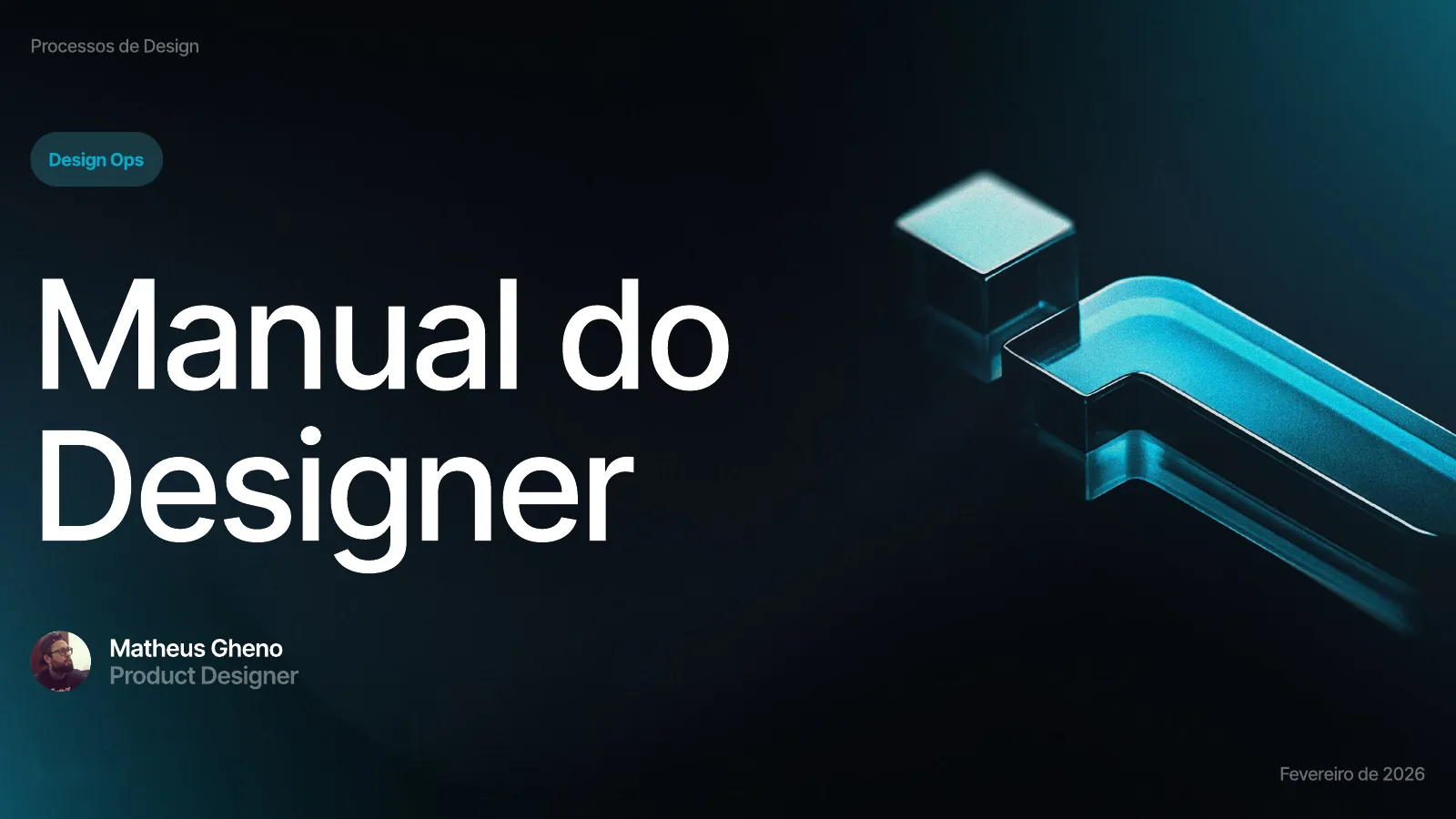
A manual that defines the design process, from kickoff to handoff, used by the 5 PDs and 9 squads.
Use the arrow keys or swipe to change page
Page 1 of 56
Context and problem
Nothing was documented and there was no shared direction.
Everything came from each PD’s own experience and preference. That made it hard when people joined or left the team, and it hurt predictability, process standardization and the ability to adjust the method when needed.
The manual was created to define what was vague and standardize what was messy, so that every request, regardless of who works on it, follows the same quality standard.
Process
Shaped around the team’s reality.
The manual was built by looking at the process the team was living at the time. It grew out of a need, and the ideal process was then shaped around our reality: a fast, agile environment with very specific needs for each request.
It was presented to the company to show the team’s value and quality standard and to make sure everyone knows how we work. The technical part is for the PDs; the general part is for the whole company, from the board to other departments.
Decisions
Three decisions that hold the process together.
A standard 5W2H brief
Every request starts with the same set of questions, so the scope is clear before work begins and does not depend on who is asking.
Sizes S, M and L
A request is sized before it enters the queue: S takes up to 5 days, M about 10 and L 15 or more. That gives the team and requesters predictability.
Standardized file and handoff
File organization and the handoff to development follow the same format, so anyone can find what they need.
Results
What changed after the manual.
Today: 48 requests per month with the same 5 PDs, 1 in 3 with rework, and 40%, 40% and 20% of small, medium and large requests.
Lesson
Documenting is as powerful as executing. With the manual, whoever leaves, joins or has a question understands how and when each step happens, and why.